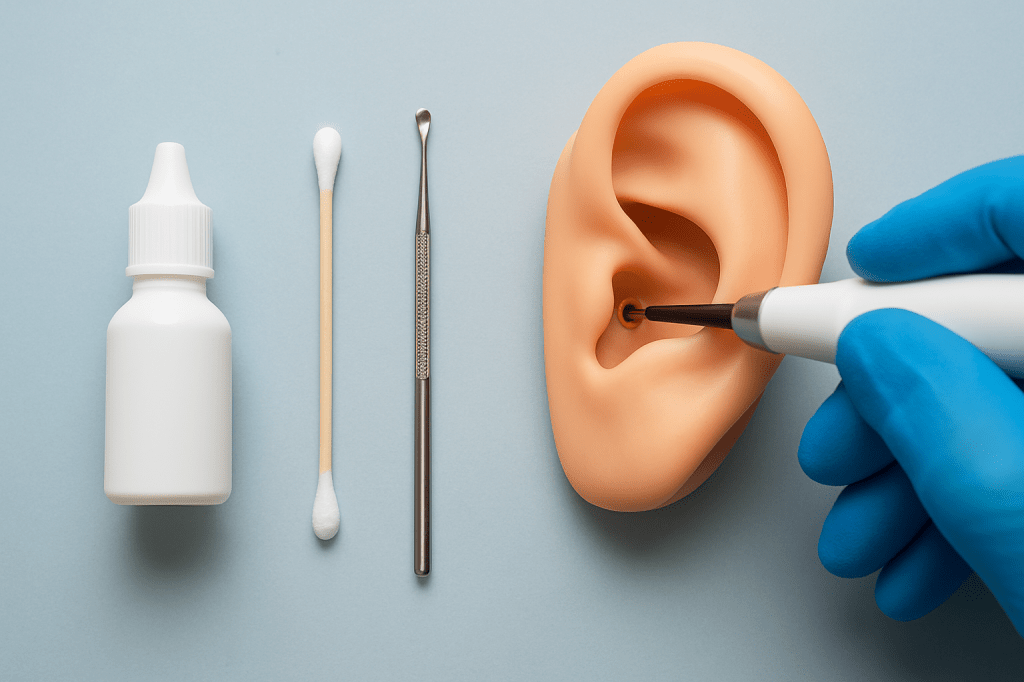
When it comes to ear health, one topic that often gets overlooked — until it becomes a problem — is ear wax. It’s something we all deal with, but many of us don’t really understand its role, or the safest ways to manage it. If you use hearing aids, like I do, staying on top of ear wax build-up is especially important.
In this post, I want to take you through what ear wax actually is, why it matters, and the different methods of removing it — with a simple breakdown of the pros and cons for each approach.
What is ear wax and why do we have it?
Ear wax, or cerumen, is a natural substance produced by glands in the ear canal. It’s actually there to protect us — trapping dust, dirt, and microorganisms before they can get deeper into the ear. It also helps keep the skin inside the ear from drying out and cracking.
Most of the time, ear wax gradually makes its way to the entrance of the ear, where it dries out and falls away without us even noticing. However, sometimes wax builds up too much, especially if it’s pushed further in by hearing aids, earplugs, or even cotton buds (which, despite popular belief, should never ever be used for cleaning ears!).
For people with hearing aids, wax can be particularly problematic. It can block the sound outlet of the aid, cause feedback (that high-pitched whistling sound), or even damage delicate components. It’s one of the leading causes of hearing aid repairs!
Different methods of ear wax removal
There are several ways to deal with ear wax build-up. Each has its own advantages and disadvantages. Here’s a look at the most common methods:
1. Ear Drops (Softening Agents)
How it works:
You place a few drops of oil-based or water-based solution into the ear to soften the wax, making it easier for the body to naturally expel it.
Pros:
- Non-invasive and easy to do at home
- Can be very effective for mild blockages.
Cons:
- Not suitable for everyone (especially if you have a perforated eardrum).
- May take several days or even weeks.
- Sometimes softens the wax but doesn’t actually clear it, which can temporarily make hearing worse.
2. Syringing (Irrigation)
How it works:
A controlled stream of warm water is flushed into the ear to wash out the softened wax.
Pros:
- Can be very effective for a full blockage.
- Relatively quick when performed properly.
Cons:
- Needs to be done carefully to avoid damaging the ear canal or eardrum so therefore should only ever be performed by a qualified medical professional
- Not recommended for people with ear infections, previous ear surgery, or perforated eardrums.
- Some people find it uncomfortable or dizzying.
3. Microsuction
How it works:
A tiny vacuum device is used to gently suction wax out of the ear canal, usually under direct vision through a microscope or lighted medical loupe.
Pros:
- Considered one of the safest methods however this should only ever be performed by a qualified medical professional
- Can remove even stubborn, dry, or deep wax.
- No water involved, which makes it safer for people with ear problems.
Cons:
- Can be a bit noisy and sometimes causes a brief feeling of pressure.
- Generally more expensive than other methods.
- Access can be limited depending on where you live.
4. Manual removal (Instrumentation)
How it works:
A clinician uses special tools like curettes or forceps to manually scoop out the wax under direct visual guidance.
Pros:
- Precise and immediate removal.
- No water or suction involved.
Cons:
- If done incorrectly, can cause damage or discomfort so therefore should only ever be performed by a qualified medical professional
A word about ear candling (Not Recommended)
How it works:
A hollow, cone-shaped candle is placed into the ear canal and lit at the other end. The theory is that the heat creates a vacuum that draws wax out of the ear.
Why it’s not recommended:
Despite its popularity in some circles, there is no scientific evidence that ear candling is effective at removing wax. In fact, studies have shown it does not produce enough suction to pull wax out of the ear. Worse, it carries significant safety risks — including burns, ear canal blockages from candle wax, and even eardrum perforation.
Bottom line:
Ear candling is not a safe or effective method for ear wax removal and should be avoided.
Final Thoughts
Managing ear wax isn’t about getting rid of it completely — it’s about keeping it in balance. A small amount of wax is perfectly normal (and healthy!). But if you use hearing aids, regular checks are a good idea to prevent build-up from causing problems with your devices or your hearing.
If you’re noticing signs of blockage — like muffled hearing, feedback from your hearing aid, or a feeling of fullness — don’t be tempted to poke around with cotton buds or ‘DIY Wax Removal’ tools often available online. Instead, see a professional who can recommend the safest removal method for your situation.
Taking a little extra care with ear wax management can make a big difference in keeping your hearing, and your hearing aids, working at their best.
Take action for better hearing health
If it’s been a while since you had your ears checked, or if you’re experiencing any issues, don’t wait. Book a professional ear health check today — your ears (and your hearing aids) will thank you for it!
And remember, if you have any questions about ear wax, hearing aids, or hearing health in general, feel free to reach out. I’m always happy to help.









Leave a Reply