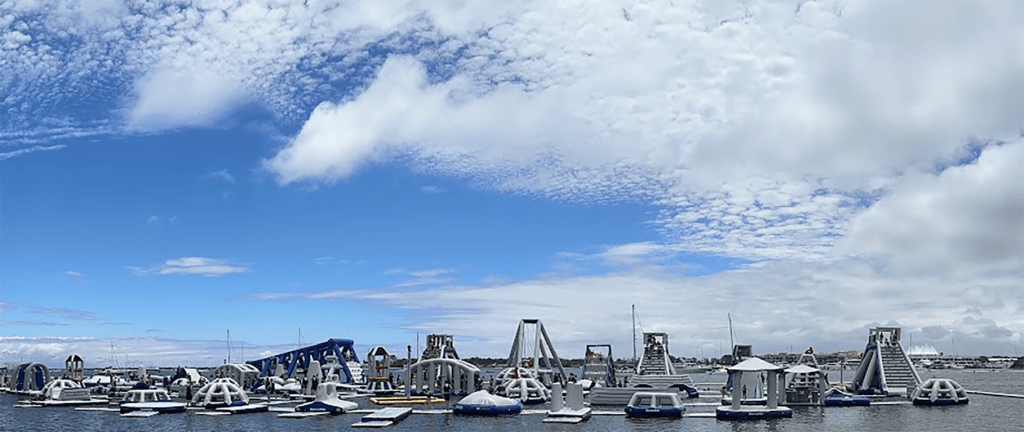
Standing at the edge of Aqua Park on Australia’s beautiful Gold Coast, watching my kids buzzing with excitement, I found myself facing a familiar dilemma.
Do I wear my cochlear implant aqua kit so I can hear instructions, warnings, and my kids calling out — but risk it coming off when I’m inevitably launched into the water?
Or do I leave it off, remove the risk entirely, and accept that the experience will be silent for me, relying on my kids to relay anything important?
It’s the kind of decision people with typical hearing never have to think about. For me, it’s just one example of the constant calculations that come with hearing loss — especially when travelling away from home.
I made a choice and enjoyed the day, but it reinforced something I’ve learned over time: holidaying with hearing loss comes with challenges, but it doesn’t have to stop you from enjoying travel or new experiences.
The hidden challenges of travelling with hearing loss
Holidays are meant to be relaxing, yet for people with hearing loss they often involve extra planning and mental effort.
Common challenges when travelling with hearing loss include:
- Missing airport or hotel announcements
- Group tours where instructions are spoken quickly
- Water-based activities where hearing devices may need to be removed
- Noisy environments like restaurants, resorts, and tourist attractions
- Safety concerns when alarms or warnings aren’t accessible
- Relying on family members to relay important information
None of these are deal-breakers, but they do require awareness, preparation, and flexibility.
Water activities and hearing devices: balancing access and risk
The Aqua Park experience captured the challenge perfectly. With my aqua kit on, I could hear what was happening around me. Without it, I removed the risk, but also removed sound.
There’s no universal “right” answer. The key is recognising the trade-off and deciding what works best for you in that moment.
Helpful strategies include:
- Using waterproof or aqua accessories if available, while realistically assessing risk
- Securing devices with retention options
- Letting staff know you have hearing loss, particularly for safety briefings
- Agreeing on simple hand signals with family
- Accepting that some experiences may be silent, and still enjoyable
Silence doesn’t have to mean exclusion.
Airports, hotels and announcements when you have hearing loss
One of the biggest stressors of accessible travel is missing spoken information — boarding calls, gate changes, or hotel instructions.
Simple strategies can reduce that stress:
- Use airline and travel apps for visual updates
- Position yourself where you can see staff clearly
- Tell airline or hotel staff early that you have hearing loss
- Ask for written instructions when possible
- Travel with someone who understands your communication needs
Most people are willing to help, but they need to know what you need.
Eating out and noisy holiday environments
Restaurants and busy tourist areas are often acoustically challenging. Background music, echoing spaces, and crowds can make listening exhausting.
What helps:
- Sitting away from kitchens, speakers, or busy walkways
- Choosing outdoor seating where possible
- Asking people to repeat themselves without apology
- Taking listening breaks during the day
- Accepting that not every meal needs perfect conversation
Listening fatigue is real, especially when travelling. Pacing yourself matters.
Safety, preparedness and peace of mind when travelling with hearing loss
Safety is a genuine concern when travelling with hearing loss, particularly in unfamiliar environments.
At home, many of us rely on visual or vibrating alerts. On holiday, those supports may not exist. Add water, humidity, heat, long days, and unfamiliar charging setups, and the risk to hearing devices increases significantly.
That’s why I believe travelling with backup hearing devices whenever possible is essential.
I have a client who runs a winery and took what should have been a dream trip to Italy’s wine regions. Early in the trip, his Lyric hearing aids stopped working, and he had no backups.
Winery tours became frustrating, conversations with hosts were missed, and tastings lost much of their richness. Instead of immersing himself in the experience, he spent the trip managing stress and disappointment, all because he had no fallback when his hearing technology failed. We have since spoken about ways to avoid this happening again the future.
Takeaway: When hearing devices fail on holiday, the absence of a backup can turn a once-in-a-lifetime trip into a compromised experience.
Sound processors get knocked off. Hearing aids stop working. Chargers fail. Batteries drain faster than expected. And when you’re away from home, repairs aren’t always an option.
Travelling with backups turns a potential safety issue, and emotional setback, into a manageable inconvenience.
Practical safety strategies include:
- Asking hotels about visual fire alarms or alternative alerting options
- Carrying backup hearing aids, sound processors, or older devices
- Packing spare chargers, batteries, drying kits, and retention accessories
- Using apps for visual alerts and updates
- Agreeing on visual cues with family for emergencies or instructions
Backup devices aren’t about expecting failure, they’re about removing the fear of what if.
The emotional impact of travelling with hearing loss
Some of the hardest moments aren’t practical, they’re emotional.
Relying on your family or travel companions to relay information. Missing jokes. Feeling like the “difficult one” in a group.
I’ve felt that many times. But I’ve also learned this: holidays aren’t about perfect hearing — they’re about shared experiences.
My kids don’t see me as a burden. They see me as Dad. The one who still jumps in, laughs at the chaos, and makes memories, hearing or not.
Don’t let hearing loss hold you back from travel
Hearing loss will always be part of the journey. It brings compromises, adaptations, and occasional frustration.
But it doesn’t get to decide whether you travel.
It doesn’t get to decide whether you try new experiences.
And it doesn’t get to steal your joy.
Plan where you can. Advocate when needed. Adapt when required.
And most importantly, don’t let hearing loss hold you back from enjoying holidays away, because the memories you make will always be louder than the sounds you miss.




 Talking Hearing Loss
Leave a reply to Judy Nussenblatt Cancel reply