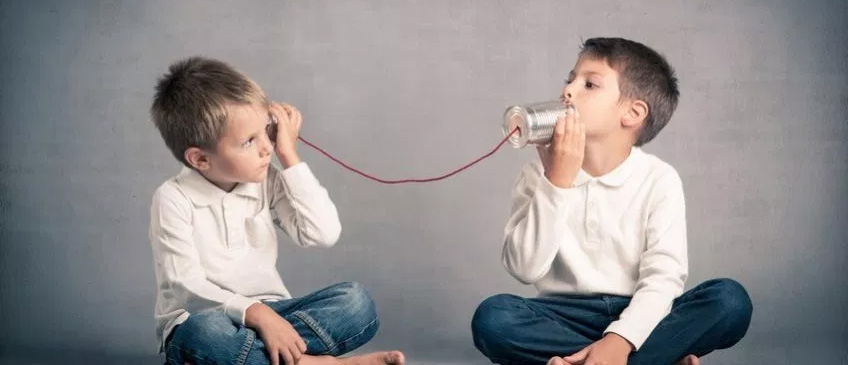
Communicating with someone who has hearing impairment can be like solving a puzzle together—it’s a bit tricky, but with some patience and a sprinkle of creativity, you’ll both get there. While it might occasionally test your patience as the speaker, remember that it’s often doubly challenging for the listener who’s working hard to piece things together.
Here are a few tips to help make conversations smoother for both of you—served with a side of wit and goodwill.
1. Get Their Attention First
Start with a name call, a gentle tap on the shoulder, or even a friendly wave to get their focus. Eye contact is often enough to signal, “Hey, I’m talking to you!”
🧠 Use any sense other than sound to grab their attention, but keep it friendly. Think light tap, not exasperated poke. No one likes to be startled into a conversation.
2. Set the Stage
Find a quiet spot, stand at a comfortable distance, and make sure they can see your face. Don’t hide behind your hand, scarf, or coffee mug—lip-reading is easier without obstacles.
🔊 “Can you hear me now?” works best in places where background noise isn’t competing for attention.
3. Speak Clearly, Not Loudly
While it’s okay to raise your voice slightly, shouting can distort words and come across as, well, less than pleasant. Speak clearly, give them time to process, and pause to ensure they’re following.
😕 If you notice a confused look, it’s probably not your joke falling flat—they might only have caught parts of what you said.
4. Be Concise (But Not a Robot)
Keep your sentences simple and to the point. Overloading with details can feel like throwing a dictionary at them. Start with the main idea and build from there if needed.
📌 Example: “The meeting is in Room 12 at 3 PM” is easier than, “So, there’s this meeting happening later—it’s in the back of the building, Room 12, you know, near the coffee machine, around 3-ish?”
5. Get Visual
Your face, hands, and body are powerful tools—use them! Point, gesture, nod, or even mime a bit if it helps. If all else fails, grab a pen and paper or type it out on your phone.
👋 A well-placed hand gesture can sometimes communicate more than words ever could.
6. Rephrase, Don’t Repeat
If your words aren’t landing, change your approach. Instead of repeating the same sentence, try saying it differently. Breaking up complex sentences into smaller chunks can work wonders.
💡 Example: “The bus will depart at 10 AM” might land better as, “The bus. It leaves at 10 AM.”
7. Keep Your Cool
Patience isn’t just a virtue here—it’s essential. Frustration helps no one, and a calm, kind demeanor will keep the conversation flowing smoothly.
A Real-Life Illustration
Here’s a true story that captures all these tips in action:
My wife once asked me to bring in the laundry. Her first request was polite and clear to most ears:
“When you get a moment, could you bring the clothes in from the line outside?”
I missed the point entirely. She repeated herself, and again, I was lost. Instead of getting flustered, she changed her strategy:
- “I have some clothes hanging outside” (she pointed to the line).
- “Could you please take them down?” (she mimed removing pegs).
- “And bring them inside?” (she pointed toward the laundry room).
Once she saw that I understood, she added, “No rush—just when you have time.”
Her calm demeanor, gestures, and rephrasing made everything click. From my perspective, until she pointed out the clothesline, I was piecing together fragments and getting nowhere fast.
The Golden Rule
The person with hearing loss isn’t misunderstanding you on purpose, so every little effort you make is like gold to them. Whether it’s using visuals, rephrasing, or just staying patient, your consideration means the world.
And hey, you might even discover a newfound talent for charades along the way!








 Talking Hearing Loss
Leave a reply to Why people with hearing loss need to advocate for themselves (and how to do it without losing your cool) – Talking Hearing Loss Cancel reply