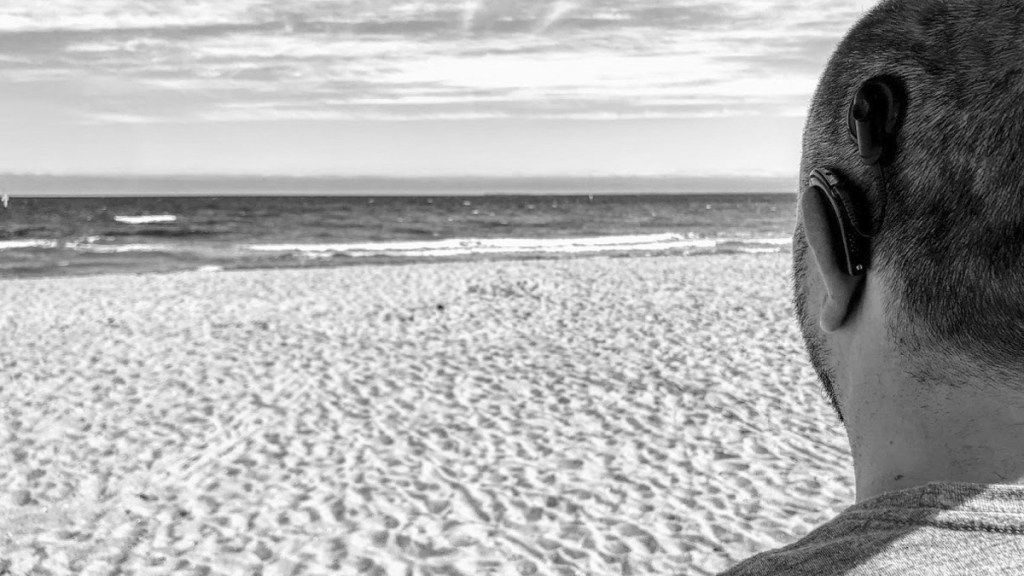
When I lost the hearing in one ear at the age of 19, I was advised against getting a cochlear implant by my hearing specialist as “the brain would not be able to cope with the 2 different signals received from each ear”. This fear of cochlear implants remained with me for most of my life. A change in career and a desire to conquer my hearing difficulties brought me back to investigating a cochlear implant again, as much had changed in the past 25 years. After a lengthy assessment process, I was determined to be a suitable candidate.
On Thursday, 23rd February 2017, I had my cochlear implant surgery. Up until about 1pm, when they brought me down to the operating theater and even as I was being prepped, I kept asking any staff that attended to me, ‘Who will be performing my surgery??’ I already had a mental list in my head about which surgeons I felt were experienced enough. It wasn’t until I saw the friendly eyes of Dr Clair Iseli and heard her calm voice (behind her mask) that I relaxed.
Dr Iseli was the doctor that I had been consulting through out my entire assessment process, we got along well and she had already earnt my trust so I knew I was in good hands.
When I awoke from the cochlear implantation at around 5:40PM, the first thing I saw was Dr Iseli’s face looking down at me as she told me that everything went to plan. My first response to this great news was along the lines of “Were you able to insert the entire electrode array? Was there any nerve response to the array? Why does my lip feel numb?”
I am such a nerd! Needless to say I had done heaps of research into cochlear implants in the past so I knew some of the problems that could occur during the implantation and what measures the surgical team take to test that it was successful. Even after waking up groggy from general anesthesia, I still had enough of my wits to ask technical questions.
My recovery was less of a big deal than I expected it to be. (26 years prior, after the stapedectomy, I experienced several days of non-stop dizziness. It was not alot of fun for me and probably not much fun either for the 3 guys I was sharing a room with because all I did was vomit the whole time) This time there was no dizziness but I did seem to have elevated levels of tinnitus.
The next morning at about 7.30am they came to check that the wound looked normal and I was discharged. By about 10am I was on my way home.
My ear and the area around it was completely numb. The tinnitus had thankfully subsided. The only pain I had was in my throat from where they inserted a breathing tube during the surgery. This was unlike any sore throat I have ever had; eating was painful, drinking was a little better but cold drinks hurt and warm drinks hurt. Jelly and custard hurt. The only thing I seemed to be able to tolerate was my wife’s delicious chicken broth.
I was home from work for 2 weeks and so to pass the time I started recording a video blog of my day to day experiences. Other than that, I binged watched alot of television.
My switch-on date was set for Thursday, 9th March 2017. Waking up on this particular morning was a little bit like waking up on Christmas morning when I was a kid. I had seen all those cochlear implant switch on videos that can be found on social media so I was hoping for an ‘Oh my god, I can hear again’ moment.
The first mapping and subsequently my switch-on was a little bit underwhelming, very confusing and a tad disappointing.
A mapping session is where the minimum and maximum electrical stimulation levels of the implant are adjusted.
My audiologist, Hayley began by determining the lowest level of stimulation I could detect across each of the 22 electrodes which had been threaded through my cochlear. I don’t know if I was suppposed to perceive these stimulations as sounds because I certainly didn’t. I could detect something, but it didn’t resemble sound to me, just a feeling (like someone brushing your skin lightly with a feather).
Next she presented increasing levels at each electrode (one at a time) until I felt I was at the maximum comfort level.
Finally, she replayed my preferred maximum levels in groups of 3 adjacent electrodes to confirm that I perceived them at equal intensity and comfort level.
Next Hayley turned on the implant and started talking to me to test it out. I should have been able to hear her. I didn’t hear words, I didn’t detect speech. Again I was getting something, some sort of feeling, but there was nothing at all to connect this sensation to the movement I saw of her lips.
I left the appointment disappointed and full of doubt. Maybe after all I had been through, this was as good as it was going to get.
My car was parked across the road and as I waited for the lights to change so I could cross the street, something happened….
… as the little green man appeared, the vision-impaired crossing signal began to make its tapping sound.
I heard that tapping through my left ear! I actually HEARD it!
To me, that tapping sounded like the sweet voice of an angel, whispering the secrets of life, the universe and everything directly into my left ear!
My ‘Oh my god, I can hear again moment‘ had finally come and when I least expected it.
This gave me hope. Maybe I had been expecting too much too soon. I decided to tackle this the same way as a child learning to walk.
ONE
STEP
AT
A
TIME
From there began a process of learning to hear again from an ear which was “dead” for most of my life. I started with simple sounds at first (the turning indicator of my car, ticking of clocks, beeping of the buttons on the microwave oven) and then gradually moved onto slightly more complex sounds (the sound of the door bell, my dogs barking, bashing saucepan lids together)
One afternoon as I was waiting in the car to pick up my eldest son from high school, I watched over a video I had recorded that morning on my phone. I could actually make out that I was hearing myself talking, though the meaning of my words was just out of reach. It was a little bit frustrating yet at the same time very encouraging. It was now time to ramp things up a bit.
To practice learning to understand speech again, I listened to an audiobook of my favourite novel (Stephen King’s It) streamed to the implant alone while following along with a printed copy of the novel. At first what I was hearing was meaningless but over time I was able to pick up a single word here and there. Eventually one word became two, two words became a sentence, a sentence became a paragraph and gradually I was able to look away from the printed novel for longer and longer periods of time.
I did the same thing while watching television; reading along with the captions while I had the audio streamed directly to my implant. I would also read to my 2 younger children at night, listening to my own voice via the implant.
To add more complexity to learning to understand speech through the implant, I also used my daily train commutes to and from work to close my eyes and just listen to the various conversations that were happening around me (which is a much nicer way of saying that I was eavesdropping on what my fellow commuters were saying)
I was lucky to be working for Blamey Saunders hears as we have access to a tool called the Speech Perception Test (SPT) which was developed by Peter Blamey, Elaine Saunders and their team. The SPT uses a random list of 50 monosylabic words to test how well you can hear various speech features. The SPT was the perfect tool for me to measure just how well I was adapting to hearing and understanding speech though the implant.
Mapping sessions with the Cochlear Implant Clinic are fairly regular at first when you receive a cochlear implant so both Hayley and Dr Iseli were able to see the progress I was making and they were amazed. I think we all hoped for, but didn’t really expect, me to adapt to the implant as quickly and as fully as I did..
A question I often get asked is whether I can listen to music through my cochlear implant. This is a tricky question to answer.Through the implant alone I can ‘hear’ music and recognize and identify a song I have heard before however it sounds very different. It’s synthetic, it lacks warmth and definition however the music is recognisable. Kind of like an 8-bit version of Mario.
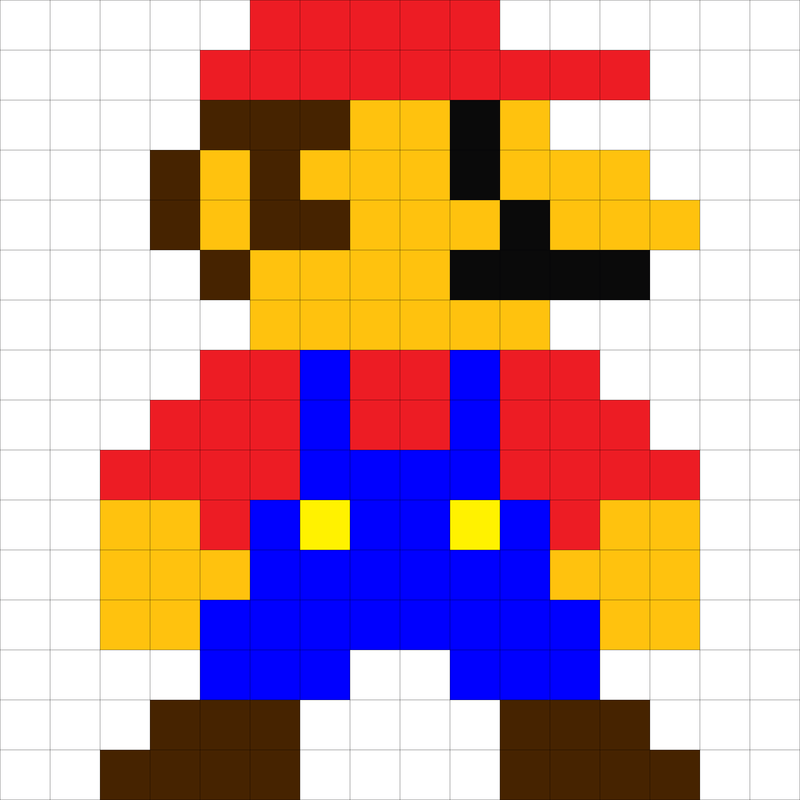
There is enough information here to identify Mario however the definition is limited.
I am used to hearing music in mono as I am totally deaf in my left ear. The hearing loss in my right ear is severe to profound, worse in the high frequencies so the music I hear via my aided right ear lacks alot of the defining characteristics; lyrics are sometimes vague, and the music sounds bland. Like a grey scale slightly blurry Mario.

The interesting thing is that when I am listening to music through the implant and my hearing aid, IT SOUNDS AMAZING….AND IN STEREO!!!
The cochlear implant picks up the high frequency music sounds like the cymbals and high hats of a drum and the twangs of a guitar in a way that I would never be able to hear through my hearing aid alone. The hearing aid on the other hand gives the music it’s warmth, definition and identity. If I turn off either one of them, the music does not sound complete but when both are on I feel like I am hearing the music the way it was meant to be heard.

My experiences were very different to what I was incorrectly warned about 26 years earlier. My brain was coping extremely well with the different signals received from my 2 ears. It was absolutely amazing to be able to experience the neuroplasticity of the brain at work.
I think everyone was amazed at how well I was adapting, none more so than me.
If you need a clearer picture of how my cochlear implant gave me back my groove then check this out …
Back when I worked in the Dick Smith store (about 4 years before I had my cochlear implant), the laptops and tablets were protected by pressure sensitive alarms which had quite a loud high pitched shrill. These alarms were so loud that you could feel the pressure of the sound waves if you were close to them however, I could never hear if these alarms were going off. If I ever needed to reset one of these alarms I would frantically run from one to the next trying to work out which one was blaring.
One morning (about 6 months after receiving my cochlear implant) I arrived before everyone else at the Blamey Saunders clinic and could hear an intermittent chirping sound coming from somewhere in the Audiology office. It sounded very much like the chirp of a hearing aid and so naturally I suspected that my own hearing aid was feeding back (which it rarely ever does). I couldn’t find the source of the chirp and so later when some of the other clinicians arrived I asked if anyone else could hear it. They must have thought I had lost my marbles because no one else could. Eventually I identified that the source of this chirp was a hearing aid that had fallen between two desks and turned on.
It’s a pretty huge change in circumstances to go from being unable to hear a loud alarm to being the only one who could hear the quiet chirp of a rogue hearing aid.
How groovy is that?






 Talking Hearing Loss
Leave a reply to My Story (Part V) – Talking Hearing Loss Cancel reply