
My hearing loss was discovered when I was in my early teens; a condition called otosclerosis which began in my left ear. At the age of 19, I had a surgical procedure called a stapedectomy which would hopefully restore a significant amount of hearing. While initially successful, complications arose months after the procedure which permanently eradicated all hearing in my left ear. By this stage, the otosclerosis was beginning to effect my right ear.
I could no longer pretend that I was just like everyone else. I had no remaining hearing in my left ear with clear signs that I was starting to lose the hearing in my right ear and I was constantly fearful that the previous spontaneous dizziness might return at any time. I started blaming anyone and everyone for what had happened to me. I become very angry and I became extremely bitter!
My hearing specialist advised me against a cochlear implant because in his opinion, my brain would never be able to cope with the difference in stimulus it would be getting from my right ear (which thankfully only had mild loss at the time) and an implanted left ear.
Surgery on the right ear was not an option. No surgeon would even consider it as another failed procedure could result in me being bilaterally deaf.
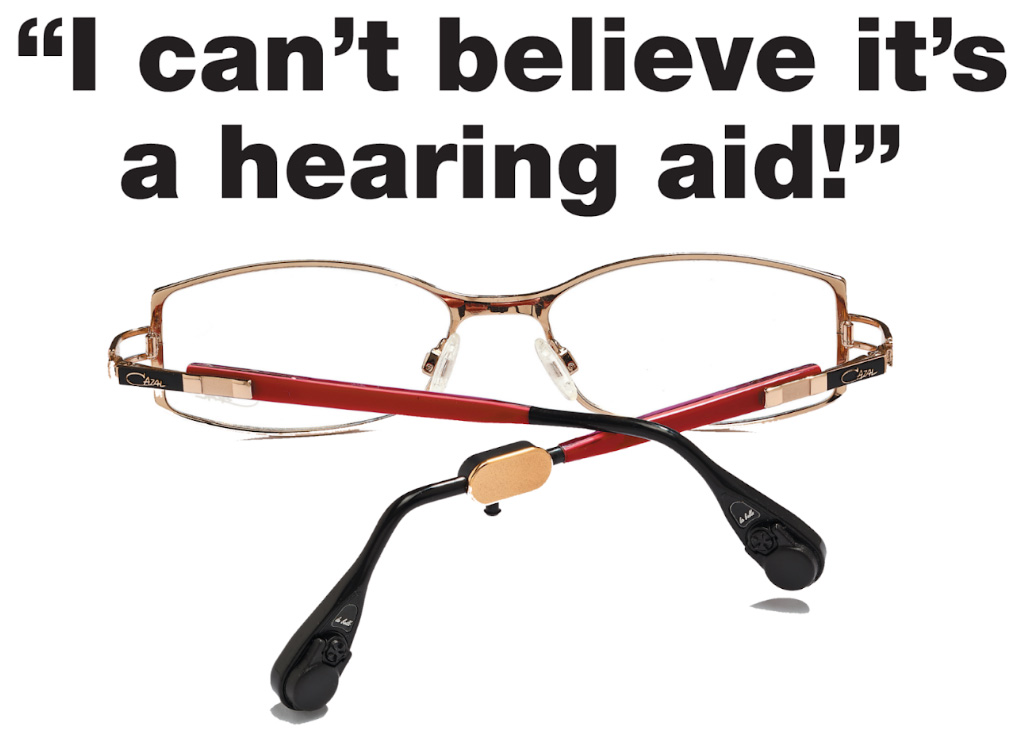
It was at this time that I got my 2nd hearing aid. I’ve never had the need to wear glasses as my eyesight is relatively good, however my hearing specialist suggested a special type of hearing aid which was fitted onto a set of glasses and would relay the sound from my left ear into my right ear via a hidden cable. A hearing aid in disguise, perfect!!
So yes, I can boast that I once wore glasses to help me hear!
University life was not easy for me; I was struggling with the course material and trying my best to deal with having single sided deafness. I received assistance from the university’s disability liaison office and was assigned a note taker (basically someone who sat next to me in lectures and took notes), which left me free to be able to concentrate on the lectures, which I recorded onto micro tape.
Every night I would listen to the the audio recordings while reading through the notes which were taken for me, just so I could try to understand the content of the day’s lectures. Only then could I attempt any homework or assignments. It was exhausting.
After university, it was time to find a job. I was struggling through job interviews and it’s fair to say that I probably made a mess of many of them because of my hearing. I persevered and eventually secured a job with an Internet Service Provider in their technical support department (back in the day when everyone was on dial-up internet). I was later promoted to a Quality Assurance role.
There was an incident when a group of us were crossing a street in the CBD of Melbourne on our way to lunch and I didn’t hear that there was a tram approaching as I walked across the tracks. One of my colleagues, grabbed my shirt and pulled me to safety. That was a frightening experience as if it wasn’t for him, I have no doubt that I would have been hit and critically injured. This should have been my hearing wake up call but unfortunately I ignored it. I was still stubbornly trying to hide my hearing difficulties however I could and maintain the facade that I was ‘normal’ like everyone else.

I later worked for a telecommunications company in a phone based support role. My trusty hearing aid glasses were now well in need of replacement (and very much out of style) so I was fitted with a Widex behind the ear hearing aid in my right ear which was a lot more powerful than my previous device. Keep in mind that I was very much oblivious to any sound coming from my left side.
About 1-2 years into this new role, I was struck with another series of dizzy spells and attacks of vertigo, and the hearing in my right ear deteriorated not long afterwards. I was totally deaf in my left ear and now absolutely reliant upon a hearing aid in my right ear. I was moved into an administration role where my duties did not involve being on the phone. (In actual fact, I asked to be moved into an admin based role and needed to prove to my employer that my hearing loss “might impact my ability of perform my current role”. Can you believe it??)
Every day at work, I expended so much mental energy just trying to understand what was being said around me that I would come home exhausted. Very often in meetings I would miss key things that were discussed so that when I gave my input or asked a question I would be told that the question had already been asked , the issue had either already been covered or my question was not relevant. I quickly learnt that it was easier for me to just shut up and not contribute. People interpreted this as me being introverted, anti-social and not having a good work attitude.
It can be very difficult to raise the topic with your employer that you need special accommodations for one reason or another but I felt that they just did not understand what hearing loss meant which made it even harder to get the help I needed.
Here’s a perfect example; the position of my desk meant that I was facing a wall with the majority of office traffic behind me. If someone needed to talk to me, I literally would not know they were there trying to get my attention until they tapped my shoulder (sometimes they just gave up and walked away probably thinking I was rude or mentally impaired)
I asked if it was possible to move my desk so that my back was to the wall which would mean I could be able to see anyone who needed to approach me for something. My request was declined because they could not see how this would make a difference given what was involved in me changing to a more suitable positioned desk. In the end, I improvised by attaching a small mirror to one corner of my computer monitor so I could see the reflection of anyone who had approached me from behind.
It was a common thing that my coworkers would make jokes about me not hearing them. They would call my name while my back was turned or make condescending remarks about me, knowing that I would either not hear or would misunderstand them. If they wanted to get my attention, they would stand up at their desks and call my name loudly across the office or worse still they would throw a tennis ball at me. I would never accept that type of harassment now but at the time I felt so low about myself and the environment that I was in that all I could do was give them a fake smile and laugh and accept it as being a part of my working life.
My typical day consisted of listening to music at my desk as I worked (streamed to my hearing aid), as that meant I didn’t have to talk to anyone which in turn meant that I didn’t have to struggle through understanding what was being said to me.
My self esteem dropped to an all time low; I was constantly depressed while at work and became very irritable about the smallest of things. My feelings of self worth were so low that I could see no way out.
I knew that this was not the right environment for me but was too scared to speak out anymore and I was petrified of resigning because it meant having to struggle through interviews again and I had convinced myself that no one would want to hire someone who was deaf.
The one blessing was my wife, Cathryn. She supported me and helped me understand that I should not let my hearing loss negatively define who I was. Whereas previously I would try and conceal my impairment by hiding my hearing aid beneath my hair, now I started to cut my hair short and not care if people could see it. My children grew up understanding that daddy sometimes needed them to be patient if he didn’t hear or understand them. I, in turn, learnt to start laughing at myself. If I misunderstood something my wife or children said to me, I would repeat back to them exactly what it sounded like they said, often with an over the top confused tone in my voice. We would all laugh at how silly it sounded. Those situations that used to frustrate and irritate me now became opportunities to laugh and joke with my wife and children.
“We need to learn to laugh at ourselves because when you don’t laugh you cry. And I don’t feel like crying” – Tracey Morgan (comedian)
And so my week followed the cycle, where I would dread waking up in the morning for work because I knew I would feel miserable and depressed and left out but more so, misunderstood. I would long for the day to end so I could rush back home to the one environment where it didn’t matter how badly I could hear because I was never judged.
I was miserable, I was angry but more than that I was frustrated. I could not go on living like this. Something had to change. I had to change!
One night I was looking through online courses I could study which might enable me to escape my toxic work environment; hoping but not really expecting to find what I was looking for. Imagine my surprise when I found that I could study online for a Diploma of Audiometry being offered via distance education from an institution in New South Wales.
I could not imagine a better way to overcome my hearing issues than to learn about how to help people like myself. I was a expert in hearing loss … damn I had a Ph.D in hearing loss because I spent most of my life dealing with it. This would be perfect for me!
The course required a lot of practical experience in an actual hearing clinic but I was fortunate that my own hearing specialist agreed to supervise my clinical learning.
Things were finally looking like there were going my way.








 Talking Hearing Loss

Leave a reply to My Story (Part III) – Talking Hearing Loss Cancel reply