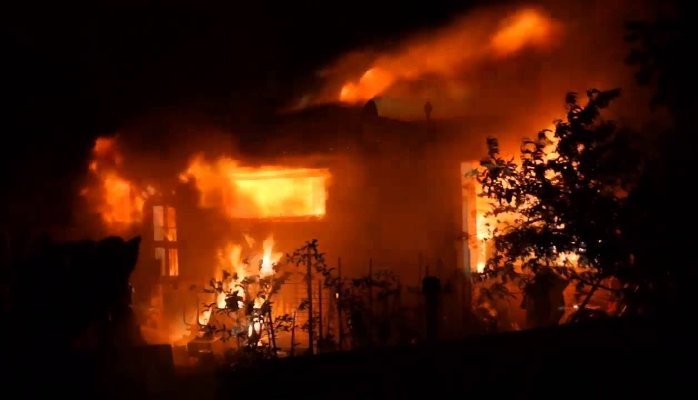
With early indications suggesting we’re facing another typically hot and dry Australian summer, it’s important that we all take the time to ensure we’re as fire ready as possible. Even if you don’t live in a high-risk bushfire area, basic precautions still matter, starting with making sure your smoke alarms are installed correctly, have fresh batteries, and are working as they should.
A smoke alarm provides early warning and valuable time to escape in the event of a fire. Smoke alarms are compulsory in every home, and it is the legal responsibility of owners and landlords to ensure they are installed and operational.
For people with hearing loss, however, there’s a critical question that needs to be asked:
Can I hear the smoke alarm if I’m not wearing my hearing aids?
When we’re asleep, we lose our sense of smell. A smoke alarm effectively becomes your electronic nose, alerting you to danger when you’re most vulnerable. A small fire can grow and engulf an entire room in just two to three minutes.
If you can’t hear a standard smoke alarm without your hearing aids, you’re relying on sight, taste, or touch to wake you, and by that point, it may already be too late.
Smoke alarms for people with hearing loss
The good news is that specialised smoke alarm systems are available for people who are deaf or hard of hearing. These systems work like standard smoke alarms but also wirelessly send a signal to alerting devices in the bedroom.
These alerting devices can include bright flashing strobe lights and bed shakers that vibrate strongly enough to wake a sleeping person. For many people with hearing loss, this type of system is essential, particularly at night, when hearing aids or cochlear implant processors are usually removed.
This is something I’ve had to consider personally. Like many people with hearing loss, once my devices are off, I can’t rely on sound to alert me. That means a standard smoke alarm alone isn’t enough. I need something that can wake me using sight and touch, not hearing.
Bellman & Symfon alerting solutions
Manufacturers such as Bellman & Symfon specialise in alerting and safety technology designed specifically for people with hearing loss. Their systems allow a smoke detector to wirelessly trigger a bedside alarm clock, which then activates a powerful flashing light and a bed shaker.
At home, I use a Bellman & Symfon alarm clock that connects directly to a smoke detector. It sits beside my bed and, if the smoke alarm is activated, it delivers an alert that’s impossible to miss. It’s not subtle, and that’s exactly what you want in an emergency.
Having this system in place has provided real peace of mind. I know that if something were to happen during the night, I have a reliable way of being alerted without relying on sound alone. It removes uncertainty and replaces it with confidence, something that’s incredibly important when it comes to personal safety.
Funding options – NDIS and Smoke Alarm Subsidy Scheme
Some people may be able to access specialised smoke alarms and alerting systems through the NDIS, provided they have funding under categories such as Assistive Technology or Assistive Products – Household. If you’re unsure whether your plan covers this type of equipment, it’s worth discussing it with your support coordinator or planner.
For those who are not eligible for the NDIS, support may still be available. The Smoke Alarm Subsidy Scheme helps reduce the cost of specialised smoke alarms for people who cannot hear a standard alarm.
You can find more information here:
Victoria & Tasmania: Smoke Alarm Subsidy | Expression Australia
Queensland: Smoke Alarm Subsidy Scheme (QLD) – Deaf Connect
Subsidy schemes differ between states, so availability and eligibility will depend on where you live.
A simple device that can save your life
A properly functioning smoke alarm can mean the difference between life and death. For people with hearing loss, it’s not just about having a smoke alarm, it’s about having one you can actually detect when it matters most.
With specialised smoke alarm systems, proven alerting technology, and funding support available for eligible Victorian residents, being fire ready is achievable. It’s not about over-preparing; it’s about ensuring everyone has an equal chance to wake up, get out, and stay safe.




 Talking Hearing Loss
Leave a comment